
When a structure settles, drains poorly, or needs a new footprint, we build a base that holds the house level and sends water away from the walls. You get a written quote, and our crew handles the dirtwork, the forms, the rebar and the finish.
What signs mean you need a new foundation or slab?
Uneven floors, wide cracks in the walls, doors that stick, and water that stands against the structure after rain are the main signs. They usually mean the ground under the footing has shifted or drained badly. Concrete Group of Lakeland checks the settlement and the drainage before recommending anything.
When soil compresses or washes out, a slab drops or tilts and the stress shows up in the walls and around doors. Poor grading makes it worse by pushing moisture toward the footing, so a slab that holds water after rain is a warning on its own. If the cause is the ground, the job usually starts with excavation and a fresh pour. We tell you what needs rebuilding before we break ground, and we fix the grade so the new work doesn't fail the same way.
See also concrete resurfacing. Ready to hire for a concrete contractor in Lakeland? Start with our home page.
Before you book: What Happens During Concrete Work: The Steps Explained · Comparing Concrete Work Quotes: What Is Worth Checking
How do we scope the job and what drives the price?
A stem-wall foundation typically falls between $5.50 and $16 per square foot, and Concrete Group of Lakeland will quote that range over the phone. The exact figure comes after a site visit. Square footage, excavation depth, subbase and footing rebar move it within that range.
Soft spots that need extra compacted gravel subbase push the number up, and so does a heavier footing rebar layout. If trucks can't get close to the pour, the added labor goes on the quote. Lakeland works under the Florida Building Code, Eighth Edition (2023), and the city lists driveways among the work that needs a permit, so we confirm what your foundation needs before we schedule. Subbase, rebar and access labor each get a separate line on the written estimate.
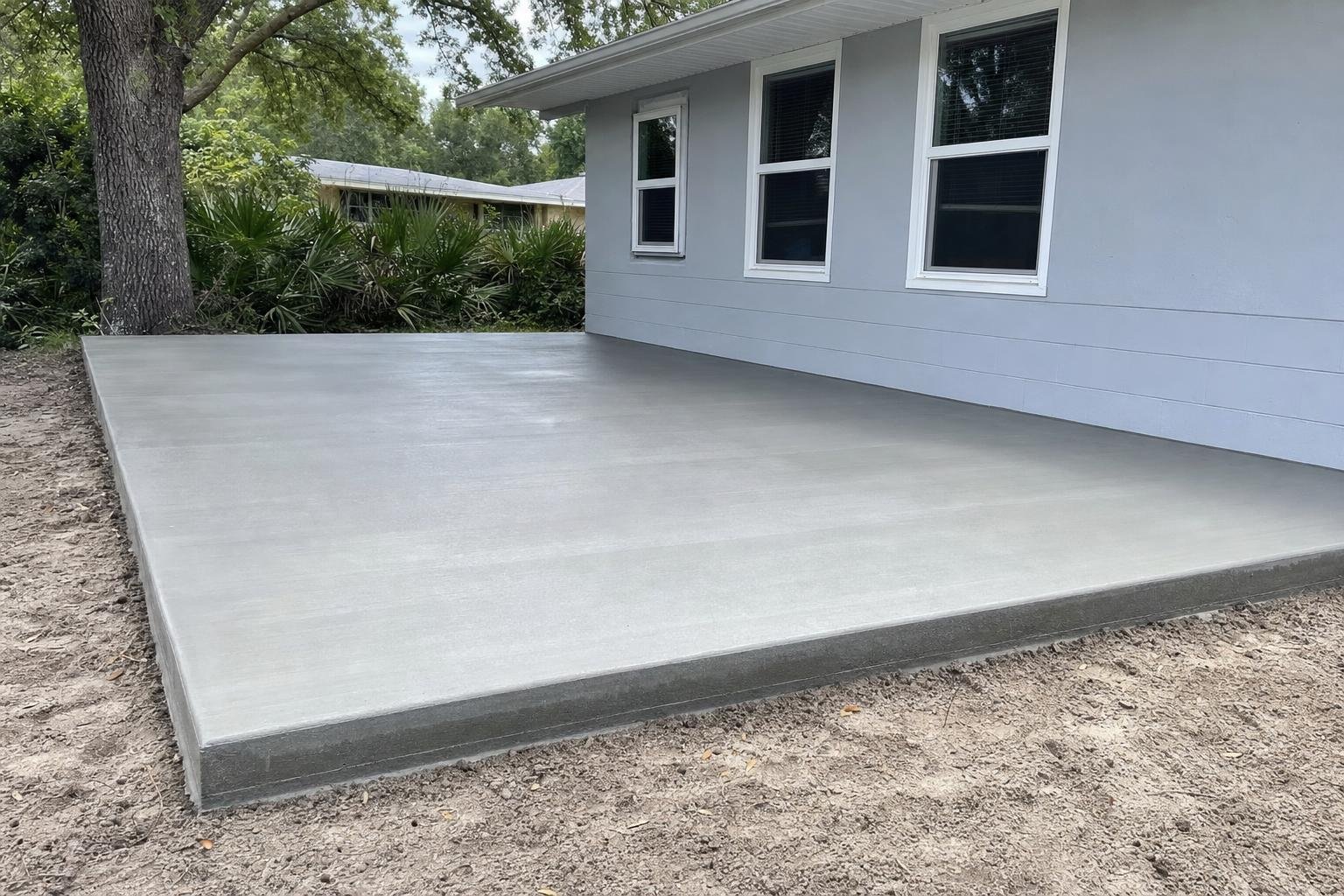
Concrete Group of Lakeland sets forms over a compacted gravel subbase with footing rebar, places the concrete, strikes it off to grade with a screed, and bull-floats it. After the pour we let it cure, backfill the gap between the excavation and the foundation where required, and shape the finished grade to fall away from the walls.
The order matters. The gravel subbase goes down first because everything above it depends on firm ground. The rebar sits in the forms before the pour so it ends up inside the footing. We keep the fresh concrete moist or covered while it cures, and we don't backfill until it has gained strength. Grading comes last because it is what keeps rain and runoff off the walls once we've left.
How long does the job take?
Timing depends on the size of the foundation, how deep the excavation goes, and how long the concrete cures before backfill. Access and ground conditions shift the timeline from house to house, so the schedule goes into the written quote after Concrete Group of Lakeland has walked the site.
Winters in Lakeland are mild, with a heating-degree-day count of just 433 (base 65 °F), so cold rarely interrupts a pour or its cure. Rain and permit timing are the more likely delays. Placing, striking off and floating happen in one continuous push, but the slab needs time to reach handling strength before we backfill or run equipment near it. If we're tying into an existing structure or working close to a property line, we pace the excavation and formwork so the neighboring walls aren't stressed.
Other Services We Offer
Typical Lakeland Pricing
Read these as planning figures, and we'll go over what pushes a job toward either end.
$5.50–$11 per square foot
$3.50–$16 per square foot
$0.90–$3.50 per square foot
Straight Answers
Call (863) 500-8893 and describe the job, and there's no obligation.