
How we tell what a slab needs
We start with the surface. Scaling, dusting that a broom cannot sweep away, and shallow cracks usually mean the slab is still sound and can be resurfaced. Cracks that wander across the pour instead of following the joints point to a control-joint problem. Water pooling against the foundation or a slab that has dropped points to the ground underneath, and that changes the job from a surface fix to a rebuild. We walk the whole slab, mark what we find, and tell you which of those three situations you have before anything gets ordered.
The service behind this guide: concrete driveway installation. Need a concrete contractor in Lakeland? Our main page lists everything.
What Lakeland's ground and weather do to concrete
Rainfall in Lakeland totals close to 49.5 inches over a year. August brings the most, about 9 inches, while November drops to around 1.4. The ground under a slab depends on the lot. The Lakeland series is deep, excessively drained sand that moves water through quickly, and Candler soil drains the same way. For that reason we check site conditions before excavation or a pour, not after. Hurricane Milton in 2024 put more than a foot of rain on parts of Lakeland in one day, so we plan grading and drainage for heavy runoff, not an average afternoon storm. With 1981 as the median build year for local housing, a lot of the slabs we repair have sat through more than four decades of those wet seasons.
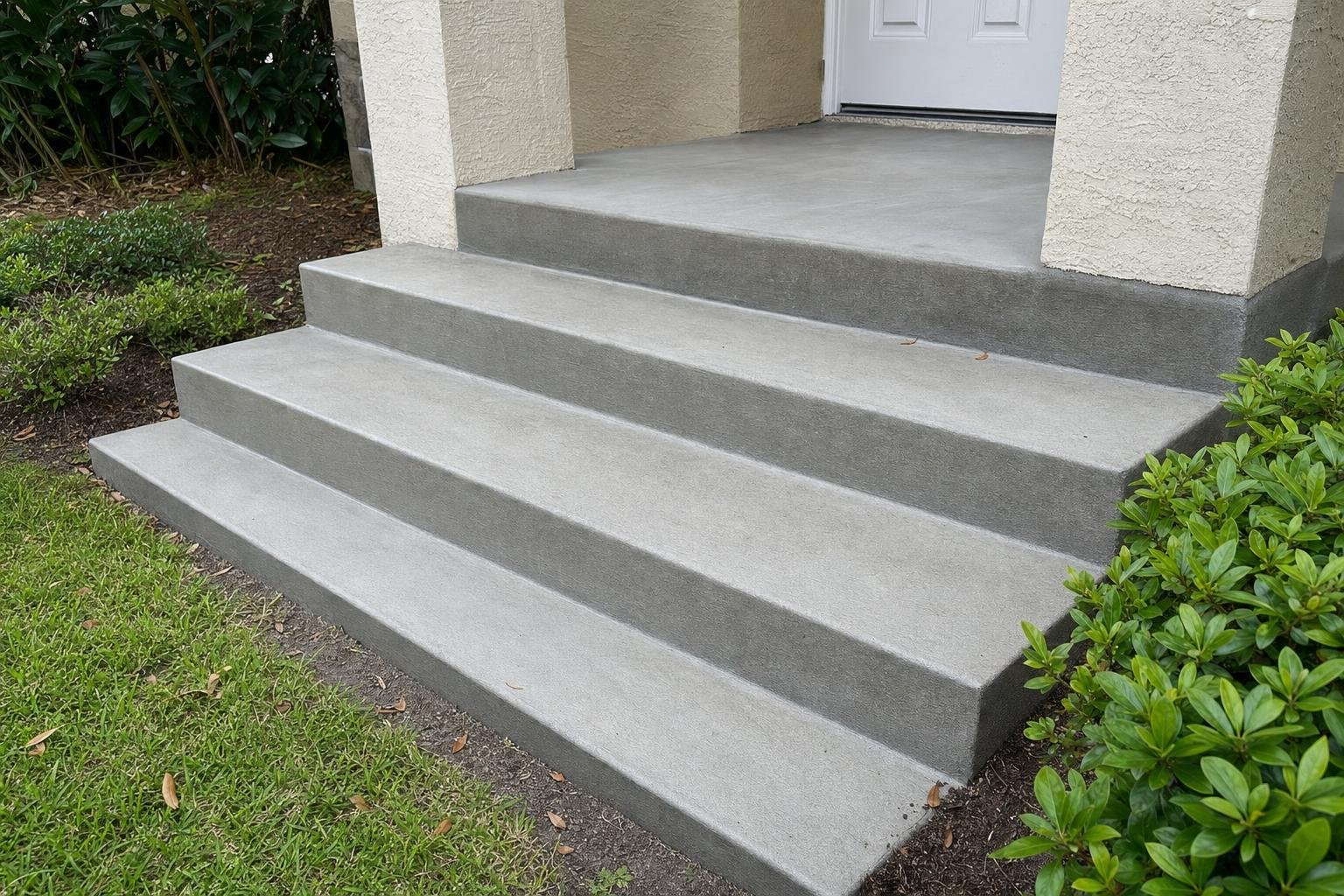
Resurfacing, stamped concrete and what they cost
If the slab is structurally sound, resurfacing is the cheaper route. It runs $2.50 to $4.50 per square foot, depending on how much prep the old concrete needs. Stamped concrete is a new installation with patterns and decorative finishing, and it runs $9 to $12.50 per square foot. The spread comes from pattern complexity and finishing time. Call us and we will talk through the usual range for your type of job. After we walk the slab and the site, we firm up the final figure.
How we build and protect a new pour
We set, align and brace the forms securely around the perimeter so the edges stay true under the weight of wet concrete. We run a vibratory plate compactor over the subgrade to firm up soft spots. Then we control cracking with tooled or sawcut contraction joints. Once the surface can resist marring, we start curing with a curing compound or a moisture-retaining cover such as wet burlap or plastic. Curing is what holds the slab's strength in and keeps early shrinkage cracks from forming. If your lot has the high-water conditions described above, we tell you before the pour what that means for the base.
Other Services We Offer
What It Typically Costs
These are typical local ranges for this kind of work, and we'll tell you which end of the range yours is likely to sit at.
$7–$18 per square foot
$1.80–$14.50 per square foot
$7–$11 per square foot
Fast Scheduling
Phone us and describe the job, and the decision stays yours.
Updated October 2026